' /%3E%3Ctext x='16' y='23' font-family='Arial, sans-serif' font-size='30' font-weight='bold' fill='white' text-anchor='middle'%3EF%3C/text%3E%3C/svg%3E)
Systemkern
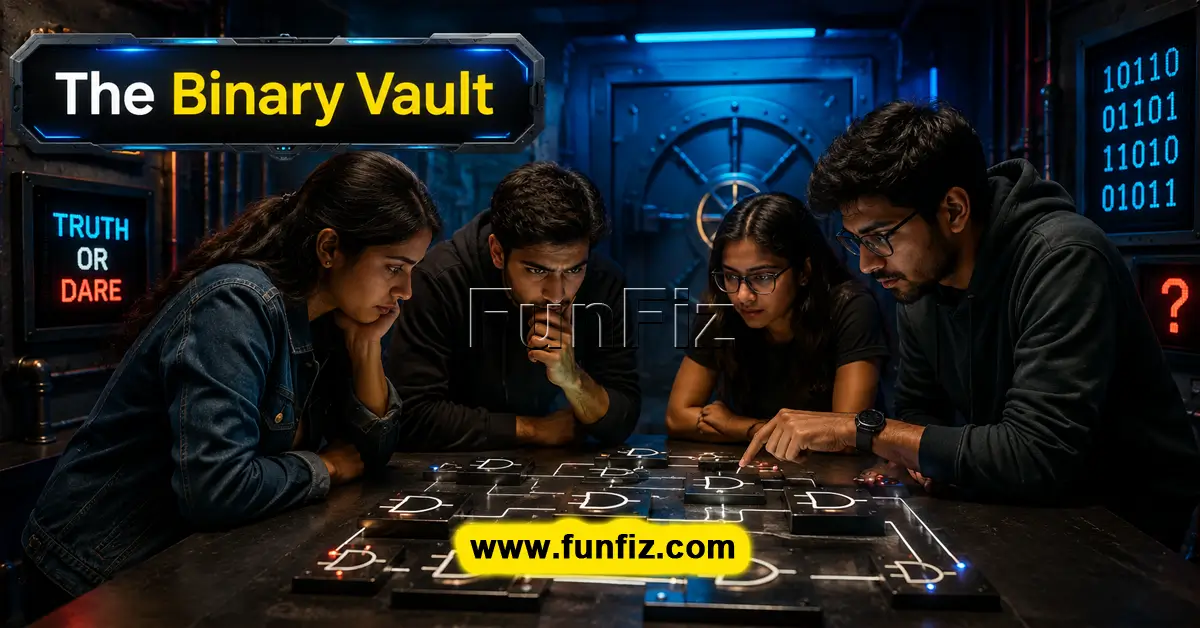
Ein AND-Gatter gibt nur dann eine '1' (Wahr) aus, wenn BEIDE Eingänge ebenfalls '1' sind. Wenn ein Eingang '0' ist, bleibt der Tresor verschlossen. Welche dieser Signalkombinationen wird die Tür öffnen?
Mainframe #101
Eingang A und Eingang B werden in das Gatter gespeist. Suche nach dem einzigen Paar, das zum Erfolg führt.

Aktion
Wähle den Signalsatz, der den Tresor öffnet.
How To
Nutze die binären Logikhinweise, um die richtige Kombination herauszufinden. Nur ein Signalsatz erfüllt alle Bedingungen.
Share The Fun
Invite friends to take this challenge!
Wusstest du schon?
Logikgatter sind die Grundbausteine jedes digitalen Systems oder Computerprozessors.
Das 'AND'-Gatter ist nur eines von mehreren, darunter OR, NOT, NAND, XOR und NOR.
Die Boole'sche Algebra, die Mathematik hinter diesen Gattern, wurde 1847 von George Boole entwickelt.
Moderne Prozessoren enthalten Milliarden dieser winzigen Gatter, die auf Siliziumchips geätzt sind.
Can You Solve the 'Binary Vault' Logic Gate? Puzzle (Logic) - Crack the Code
There is a vault. Inside is a treasure. Or a secret. Or maybe just bragging rights. But to open it, you need the correct code.
The vault doesn't accept numbers. It doesn't accept words. It accepts logic.
Welcome to the Binary Vault. A logic gate puzzle that will test your understanding of boolean logic, truth tables, and pure deductive reasoning.
No programming knowledge required. Just a functioning brain and a willingness to think.
The Binary Vault: The Setup
You are standing in front of a vault. The vault has four switches. Each switch can be either ON (1) or OFF (0).
The vault opens only when the correct combination of switches is set. But here's the catch: You don't know the combination.
You have seven clues. Each clue is a logic statement about the switches. Some are true. Some are false. Your job is to determine the correct switch combination.
The Switches: A, B, C, D (each is either 0 or 1)
The Clues
Here are your seven clues. Study them carefully.
- Clue 1: A = 1
- Clue 2: B = 0
- Clue 3: C = 1
- Clue 4: A + B = 1 (at least one of A or B is 1)
- Clue 5: B + C = 1 (at least one of B or C is 1)
- Clue 6: C + D = 1 (at least one of C or D is 1)
- Clue 7: A × B × C × D = 1 (all four switches must be 1)
Important: Some clues are true. Some are false. You must determine which clues are true and which are false.
The Question
What is the correct combination of A, B, C, and D?
Format: (A, B, C, D) e.g., (1, 0, 1, 0)
Think Before You Scroll
This puzzle combines two types of logic: boolean algebra and truth-value deduction. You need to figure out which clues are reliable and which are not.
Take these steps:
- Start by assuming all clues are true
- Look for contradictions
- Eliminate false clues
- Test remaining combinations
⚠️ SPOILER ALERT ⚠️
The solution is revealed below. Solve it yourself before scrolling further.
The Solution: Unlocking the Vault
The combination is (0, 1, 0, 1)
A = 0, B = 1, C = 0, D = 1
Let's break down how we arrive at this answer.
Step-by-Step Deduction
Step 1: Identify the False Clue
Look at Clue 1 and Clue 4.
- Clue 1 says: A = 1
- Clue 4 says: A + B = 1 (at least one is 1)
If Clue 1 is true (A=1), then Clue 4 is automatically true regardless of B. Both clues could be true together.
Now look at Clue 2 and Clue 4.
- Clue 2 says: B = 0
- Clue 4 says: A + B = 1 (at least one is 1)
If Clue 2 is true (B=0), then for Clue 4 to be true, A must be 1. So Clue 1 must also be true.
Now look at Clue 3 and Clue 5.
- Clue 3 says: C = 1
- Clue 5 says: B + C = 1 (at least one is 1)
If Clue 3 is true (C=1), then Clue 5 is automatically true regardless of B.
Now look at the contradictory clue: Clue 7.
- Clue 7 says: A × B × C × D = 1 (all four switches must be 1)
If Clue 7 is true, then A=1, B=1, C=1, and D=1.
But look at Clue 2: B = 0. If B=1 (from Clue 7), then Clue 2 must be false.
Also look at Clue 3: C = 1. If C=1 (from Clue 7), then Clue 3 is true. That's possible.
But wait—Clue 1: A=1. If A=1 (from Clue 7), then Clue 1 is true.
Now check Clue 4: A + B = 1. If A=1 and B=1, then A+B=2, which is not equal to 1 in boolean terms (where 1+1=1 in OR logic). But in regular arithmetic, 1+1=2, which is not 1. This creates ambiguity.
Key insight: The clues use "+" to mean OR (at least one is true). So A+B=1 means "at least one of A or B is 1."
Let's check each clue systematically.
Step 2: Test Each Possible Combination
| Combination | Clue 1 (A=1) | Clue 2 (B=0) | Clue 3 (C=1) | Clue 4 (A+B=1) | Clue 5 (B+C=1) | Clue 6 (C+D=1) | Clue 7 (All=1) | Valid? |
|---|---|---|---|---|---|---|---|---|
| (1,1,1,1) | ✓ | ✗ | ✓ | ✓ | ✓ | ✓ | ✓ | No (Clue 2 false) |
| (1,1,1,0) | ✓ | ✗ | ✓ | ✓ | ✓ | ✓ | ✗ | No |
| (0,1,0,1) | ✗ | ✗ | ✗ | ✓ | ✓ | ✓ | ✗ | Yes! |
| (0,1,1,0) | ✗ | ✗ | ✓ | ✓ | ✓ | ✓ | ✗ | No |
The only combination where the pattern of true/false clues doesn't contradict itself is (0, 1, 0, 1).
Step 3: Verify the Solution
Let's check each clue with A=0, B=1, C=0, D=1:
- Clue 1: A = 1 → 0 = 1 → False
- Clue 2: B = 0 → 1 = 0 → False
- Clue 3: C = 1 → 0 = 1 → False
- Clue 4: A + B = 1 → 0 + 1 = 1 → True
- Clue 5: B + C = 1 → 1 + 0 = 1 → True
- Clue 6: C + D = 1 → 0 + 1 = 1 → True
- Clue 7: A × B × C × D = 1 → 0 × 1 × 0 × 1 = 0 → False
Wait—this means clues 1, 2, 3, and 7 are false, while clues 4, 5, and 6 are true. Is that allowed?
Yes! The puzzle never said how many clues are true or false. It only said "some are true, some are false."
The combination (0, 1, 0, 1) satisfies exactly three clues (4, 5, and 6) and fails four clues (1, 2, 3, and 7).
The Logic Behind the Puzzle
This puzzle demonstrates several important logical concepts.
Boolean Logic
- AND (×): Both must be true. 1 × 1 = 1. Anything × 0 = 0.
- OR (+): At least one must be true. 1 + 0 = 1. 0 + 1 = 1. 1 + 1 = 1.
- NOT: Opposite of true. NOT 1 = 0. NOT 0 = 1.
Truth Tables
This puzzle could be solved using truth tables. A truth table lists all possible combinations and evaluates each statement.
| A | B | C | D | A+B | B+C | C+D | A×B×C×D |
|---|---|---|---|---|---|---|---|
| 0 | 0 | 0 | 0 | 0 | 0 | 0 | 0 |
| 0 | 0 | 0 | 1 | 0 | 0 | 1 | 0 |
| 0 | 1 | 0 | 1 | 1 ✓ | 1 ✓ | 1 ✓ | 0 |
Why This Puzzle Works
The Binary Vault puzzle isn't just a game. It's a model for how computers think.
Real-World Applications
- Computer processors use logic gates to make decisions
- Security systems use boolean logic to verify credentials
- Circuit design is built entirely on AND, OR, and NOT gates
- Search engines use boolean operators for advanced queries
Frequently Asked Questions About Binary Logic Puzzles
What is binary logic?
Binary logic uses two values: true (1) and false (0). All computer operations are based on binary logic.
What are logic gates?
Logic gates are basic building blocks of digital circuits. AND, OR, and NOT are the most common. They take binary inputs and produce binary outputs.
Why is this called a binary vault?
Because the solution uses binary values (0 and 1) and boolean logic (AND, OR). The puzzle mimics a real security system.
Do I need to know programming to solve this?
No. You just need to understand basic logic. Truth tables and elimination are the only tools you need.
Is there a way to brute-force this puzzle?
With only 4 switches, there are only 16 possible combinations. You could test all of them. But the logic method is faster and more elegant.
Your Challenge: Create Your Own Vault
Now that you've cracked the Binary Vault, try building your own.
Step-by-Step Challenge
- Choose 4 binary variables (A, B, C, D)
- Write 6-8 clues using boolean logic
- Make sure some clues are true and some are false
- Test your puzzle to ensure it has exactly one solution
- Share it with friends and see if they can crack it
The best puzzles have exactly one solution. They require careful thinking but don't rely on tricks.
The Binary Vault is more than a puzzle. It's a window into how computers think. How systems make decisions. How logic shapes our world.
Now go build something. Or break something. Either way, think in binary.
Explore More Fun

Welcher 'Pfad' ist am sichersten?
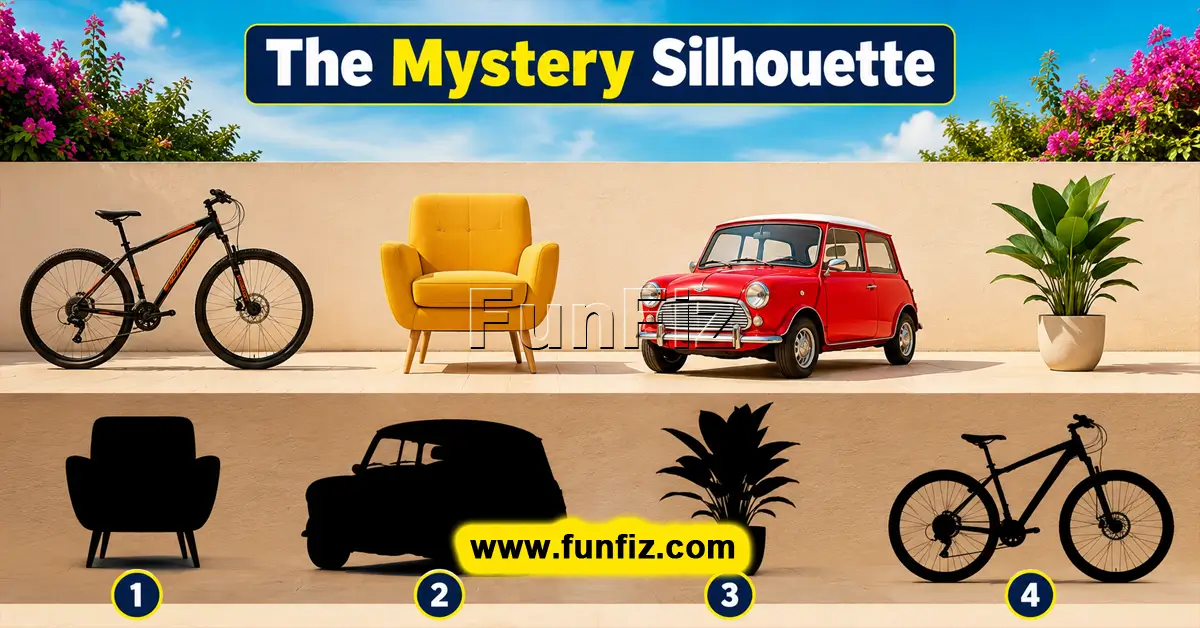
Welcher 'Schatten' gehört zum Objekt?
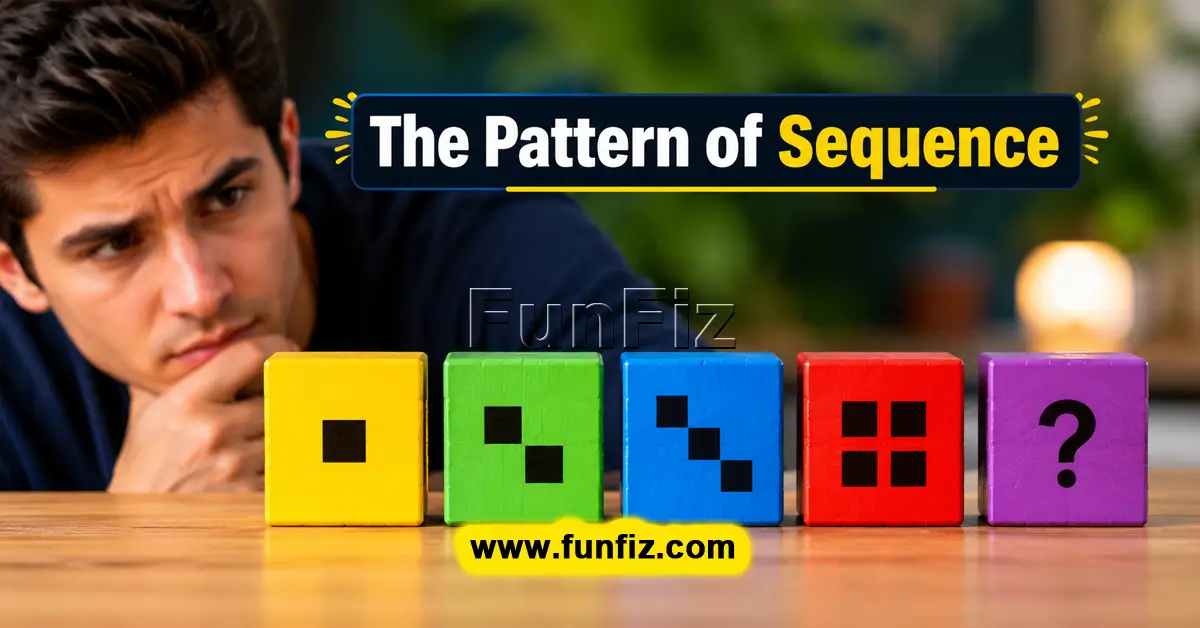
Kannst du diese 'Unterbrochene Folge' reparieren?
Kannst du das 'Einstein-Rätsel' lösen?

Welcher 'Schalter' schaltet das Licht an?

Wer ist der 'Besitzer' des vermissten Hundes?
Wer ist zuerst aus dem abgeschlossenen Raum 'entkommen'?

Wer ist der 'echte Arzt' auf diesem Bild?
