' /%3E%3Ctext x='16' y='23' font-family='Arial, sans-serif' font-size='30' font-weight='bold' fill='white' text-anchor='middle'%3EF%3C/text%3E%3C/svg%3E)
प्रगति
How To
जवाब देखने के लिए कार्ड पर टैप करें। क्या आप बिना देखे सभी को हल कर सकते हैं?
सभी उत्तर जानने के लिए प्रत्येक कार्ड को पलटें!
Share The Fun
Invite friends to take this challenge!
क्या आप जानते हैं?
दुनिया का सबसे बड़ा तौलिया 2018 में इटली में बनाया गया था, जो 100 फीट से अधिक लंबा था — एक विशालकाय को सुखाने के लिए काफी!
'तौलिया' शब्द पुरानी फ्रेंच 'टोआइल' से आया है, जो मूल रूप से धोने या पोंछने के कपड़े को संदर्भित करता था।
स्पंज पौधा नहीं बल्कि एक जानवर है। समुद्र और मीठे पानी में स्पंज की 8,500 से अधिक प्रजातियाँ हैं।
प्राचीन ग्रीस में, एथलीट व्यायाम के बाद पसीना और गंदगी साफ करने के लिए तौलिये नहीं, बल्कि स्ट्रिगिल (एक घुमावदार धातु का उपकरण) और तेल का उपयोग करते थे।
I Get 'Wetter' as I Dry—What Am I? Puzzle (Logic) - The Classic Riddle Solved
Here's a riddle that has stumped people for generations.
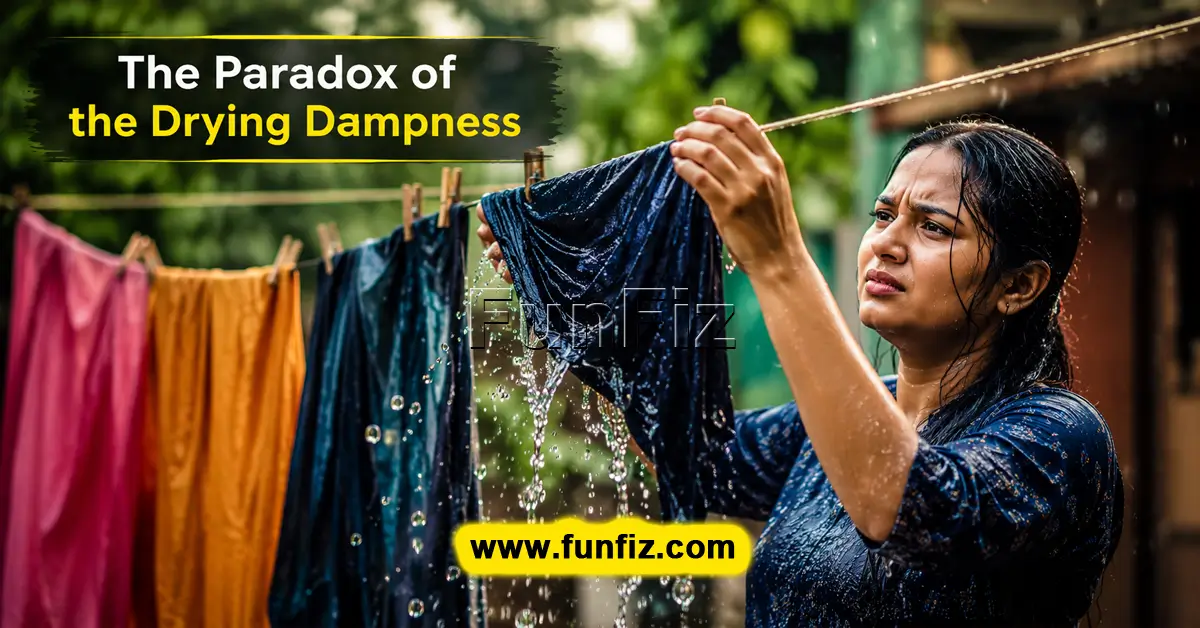
"I get wetter as I dry. What am I?"
Simple words. Confusing meaning. It sounds like a contradiction. How can anything get wetter while it's drying?
That's exactly what makes this riddle brilliant. It forces you to think differently. To see the world from a new angle.
The Riddle
"I get wetter as I dry. What am I?"
Think Before You Scroll
Take a moment. Read it again. Let it sink in.
"I get wetter as I dry."
What gets wetter while it dries? The answer is obvious once you know it. But before you know it—it's infuriating.
⚠️ SPOILER ALERT ⚠️
The solution is revealed below. If you want to figure it out yourself, stop here.
The Solution
A towel.
A towel gets wetter as it dries things. When you use a towel to dry your hands, the towel absorbs the water. As the towel does its job—drying—it becomes wetter.
It's a simple answer. But it's also perfect. The riddle relies on a shift in perspective. You think about the object itself drying. But the object is doing the drying to something else.
Why This Riddle Tricks People
The riddle works because of language. Specifically, the ambiguity of "dry."
The Two Meanings of "Dry"
- Dry (verb): To remove moisture from something
- Dry (adjective): Not wet
When you read "I get wetter as I dry," your brain automatically assumes "dry" means "become dry." But the riddle uses "dry" as an action—the object is drying other things.
This is called semantic ambiguity. The sentence has two possible interpretations. The puzzle forces you to find the one that makes sense.
More Riddles Like This
If you enjoyed the towel riddle, try these classic brain teasers.
Riddle 1: The More You Take, The More You Leave Behind
"The more you take, the more you leave behind. What am I?"
Click for Answer
Footsteps. The more steps you take, the more footsteps you leave behind.
Riddle 2: What Has a Head and a Tail But No Body?
"What has a head, a tail, but no body?"
Click for Answer
A coin. It has heads on one side and tails on the other.
Riddle 3: I Speak Without a Mouth and Hear Without Ears
"I speak without a mouth and hear without ears. I have no body, but I come alive with wind. What am I?"
Click for Answer
An echo. It repeats what you say without having a mouth or ears.
Riddle 4: What Goes Up But Never Comes Down?
"What goes up but never comes down?"
Click for Answer
Your age. It only increases.
Riddle 5: The More You Have, The Less You See
"The more you have, the less you see. What am I?"
Click for Answer
Darkness. The more darkness there is, the less you can see.
Why Riddles Are Good for Your Brain
Riddles aren't just fun. They're mental exercise.
The Cognitive Benefits
- Lateral thinking: Riddles force you to think sideways, not just forward
- Problem-solving: You learn to break down confusing problems into manageable pieces
- Perspective shift: Riddles teach you to see things from different angles
- Memory: Remembering riddles and their answers exercises recall
- Vocabulary: You encounter language used in unusual ways
Riddle Comparison: Easy vs. Hard
| Difficulty | Riddle | Answer | Why It Works |
|---|---|---|---|
| Easy | "What has keys but can't open locks?" | A piano | Wordplay on "keys" |
| Medium | "I get wetter as I dry" | A towel | Ambiguity of "dry" |
| Hard | "What is always coming but never arrives?" | Tomorrow | Conceptual paradox |
Frequently Asked Questions About Riddles
What is a riddle?
A riddle is a statement or question that has a hidden meaning. It requires creative thinking and reasoning to solve.
Why are riddles so popular?
They're universal. Every culture has riddles. They're fun, challenging, and satisfying to solve. They also pass on wisdom and language skills.
How can I get better at solving riddles?
Practice. Read lots of riddles. Learn the common patterns—wordplay, paradox, ambiguity, and lateral thinking. The more you solve, the better you get.
Are riddles good for kids?
Yes. Riddles build vocabulary, critical thinking, and problem-solving skills. They're also a great way to bond with parents and friends.
What is the oldest known riddle?
The Riddle of the Sphinx from ancient Greek mythology: "What walks on four legs in the morning, two at noon, and three in the evening?" Answer: A human (crawling as a baby, walking as an adult, using a cane in old age).
Create Your Own Riddle
Now it's your turn. Here's how to write a classic riddle.
The 3-Step Formula
- Choose an object — something simple, like a pencil, a tree, or a river
- List its qualities — what does it do? What is it like?
- Frame it as "I" statements — "I have... I am... I do..."
Example: Create a Pencil Riddle
- Object: Pencil
- Qualities: Gets shorter as you use it, leaves marks, needs sharpening
- Riddle: "I get shorter as I work. I leave marks wherever I go. What am I?"
Try it yourself. Pick any object. Write a riddle. Test it on friends.
The Beauty of the Towel Riddle
The towel riddle is beloved for a reason. It's simple. It's clever. And it reveals a universal truth about language: The same words can mean completely different things depending on context.
That's the real lesson. Not just the answer, but the process of shifting your perspective. When you're stuck on a problem, ask: "Am I interpreting this correctly? Is there another way to read this?"
Most problems are like this riddle. They only seem impossible because you're looking at them the wrong way. Change the angle, and the solution appears.
Now go dry something with a towel. And remember—you just got smarter.
No, wait. The towel got wetter.
Explore More Fun
मुझे भोजन दो तो मैं जीऊं; पानी दो तो मर जाऊं।

क्या चीज़ जितना अधिक उपयोग करो, उतनी तेज़ होती जाती है?

ऐसी कौन सी चीज़ है जो कमरे को भर सकती है लेकिन कोई जगह नहीं लेती?

कौन सी चीज़ साफ होने पर काली और गंदी होने पर सफेद हो जाती है?

ऐसी कौन सी चीज़ है जिसका 'तल' सबसे ऊपर होता है?
ऐसी कौन सी चीज़ है जिसे देने तक रखा नहीं जा सकता?

क्या चीज़ बढ़ती उम्र के साथ छोटी होती जाती है?
किसके पास एक सिर, एक पैर और चार टाँगें हैं?