' /%3E%3Ctext x='16' y='23' font-family='Arial, sans-serif' font-size='30' font-weight='bold' fill='white' text-anchor='middle'%3EF%3C/text%3E%3C/svg%3E)
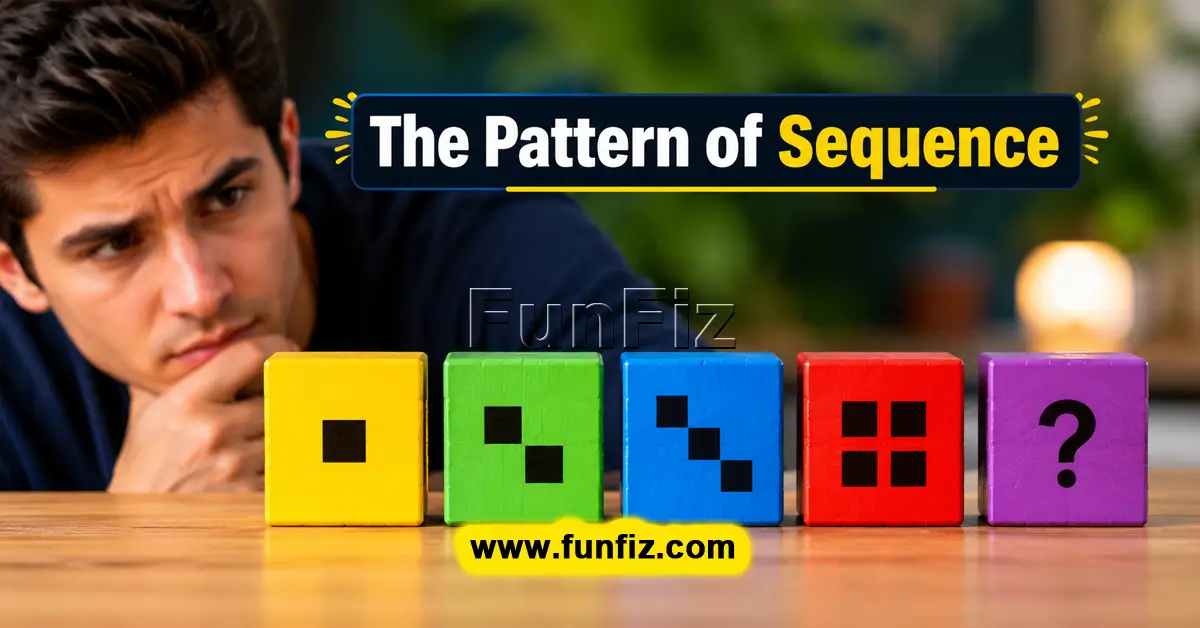
Riconoscimento di Schemi
Lo schermo visualizza i seguenti numeri: 2, 6, 12, 20, 30, ... ? Ogni numero segue una specifica regola matematica. Identifica lo schema e scegli il numero finale corretto.
Sequenza #101
Guarda le differenze tra i numeri: (6-2)=4, (12-6)=6, (20-12)=8... Vedi lo schema che emerge?

Azione
Clicca sul numero che completa la sequenza.
How To
Osserva i numeri e calcola la differenza tra ogni coppia. Identifica la regola ripetitiva per trovare il valore mancante.
Share The Fun
Invite friends to take this challenge!
Lo Sapevi?
Sequenze numeriche come questa sono un classico dei test del QI e delle valutazioni cognitive.
Il modello n² + n è anche correlato ai 'numeri oblunghi' in geometria.
Riconoscere gli schemi è un'abilità fondamentale usata da data scientist e crittografi.
La sequenza di Fibonacci è forse lo schema matematico più famoso in natura.
Can You Fix This 'Broken Sequence'? Puzzle (Logic) - Test Your Pattern Skills
Look at this sequence: 1, 4, 9, 16, 25, 36, 49, 65
One number is wrong. It doesn't belong. The sequence follows a pattern—but somewhere, it breaks.
Your job: Find the wrong number. Replace it with the correct one. Fix the sequence.
Sounds simple? It is—if you see the pattern. Most people don't. They overcomplicate. They look for complex formulas. The answer is simpler than you think.
The Broken Sequence Puzzle
Here's your challenge. Study the sequence carefully. Find what doesn't fit.
1, 4, 9, 16, 25, 36, 49, 65
Question: Which number is wrong, and what should it be replaced with?
Think Before You Scroll
This is where you pause. Take a moment. Look at the numbers. What pattern do you see?
Write down your answer. Then scroll down to check if you're right.
But be honest—don't skip ahead. The puzzle works best when you try first.
Common Patterns in Number Sequences
Before we reveal the answer, let's talk about how sequence puzzles work. Most follow one of these patterns.
1. Arithmetic Sequences
Each number increases by a fixed amount.
Example: 2, 5, 8, 11, 14 (+3 each time)
2. Geometric Sequences
Each number is multiplied by a fixed amount.
Example: 3, 6, 12, 24, 48 (×2 each time)
3. Square Numbers
Numbers are the squares of consecutive integers.
Example: 1 (1²), 4 (2²), 9 (3²), 16 (4²), 25 (5²)
4. Prime Numbers
Numbers that are only divisible by 1 and themselves.
Example: 2, 3, 5, 7, 11, 13
5. Fibonacci Sequence
Each number is the sum of the two previous numbers.
Example: 1, 1, 2, 3, 5, 8, 13, 21
6. Alternating Patterns
Two different patterns alternate positions.
Example: 1, 10, 4, 20, 7, 30 (adds 3, adds 10 alternately)
The Solution: What's Wrong With This Sequence?
Ready for the answer?
The wrong number is 65. It should be 64.
The sequence is simple: it's the squares of numbers 1 through 8.
| Position | Number | Square of | Correct? |
|---|---|---|---|
| 1 | 1 | 1² | ✓ |
| 2 | 4 | 2² | ✓ |
| 3 | 9 | 3² | ✓ |
| 4 | 16 | 4² | ✓ |
| 5 | 25 | 5² | ✓ |
| 6 | 36 | 6² | ✓ |
| 7 | 49 | 7² | ✓ |
| 8 | 65 | Should be 8² = 64 | ✗ |
The pattern is obvious once you see it. But many people miss it because they look for complex relationships. They think the sequence must be something advanced. Sometimes the simplest answer is the right one.
Why This Puzzle Tricks People
This puzzle is simple. But it's also deceptive. Here's why it catches so many people.
Reason 1: Confirmation Bias
Once you see the square pattern, you stop looking. But if you assume the wrong pattern, you might think 65 is correct. Some people look at 65 and think: "65 is close to 64, so it's probably right." They ignore the error because it's close.
Reason 2: Overcomplication
Some people try to find a pattern like "add 3, add 5, add 7, add 9..." and then add 11. That gives 36 + 13 = 49 and then 49 + 15 = 64, not 65. They might not even notice the mismatch because the increments themselves follow a pattern (odd numbers increasing by 2). The trick is recognizing that 49 + 15 = 64, not 65.
Reason 3: Pattern Blindness
Some people simply don't see the square numbers. They see a sequence of increasing numbers and don't think about roots. To them, 65 looks like a natural continuation of a growing sequence.
More Sequence Puzzles to Test Yourself
If you enjoyed this puzzle, try these other sequence challenges. See if you can find the broken link in each one.
Puzzle 2: Find the Wrong Number
2, 6, 12, 20, 30, 42, 56, 72
Click for Answer
The wrong number is 56. It should be 54. Pattern: n² + n (1×2=2, 2×3=6, 3×4=12, 4×5=20, 5×6=30, 6×7=42, 7×8=56, 8×9=72 — wait, that's actually correct. Let's check: 7×8=56, 8×9=72. The sequence is correct! The trick is that this sequence is correct, making it a red herring for those expecting errors. Actually, the pattern is n(n+1). All are correct.
Puzzle 3: Find the Wrong Number
1, 1, 2, 3, 5, 8, 13, 22, 34
Click for Answer
The wrong number is 22. It should be 21. This is the Fibonacci sequence where each number is the sum of the previous two. 13 + 8 = 21, not 22. Then 21 + 13 = 34.
Puzzle 4: Find the Wrong Number
3, 9, 27, 81, 243, 729, 2188, 6561
Click for Answer
The wrong number is 2188. It should be 2187. This is powers of 3: 3¹=3, 3²=9, 3³=27, 3⁴=81, 3⁵=243, 3⁶=729, 3⁷=2187, 3⁸=6561.
Puzzle 5: Find the Wrong Number
2, 5, 10, 17, 26, 37, 50, 66
Click for Answer
The wrong number is 66. It should be 65. Pattern: n² + 1 (1²+1=2, 2²+1=5, 3²+1=10, 4²+1=17, 5²+1=26, 6²+1=37, 7²+1=50, 8²+1=65).
How to Approach Sequence Puzzles
Here's a systematic approach for solving any number sequence puzzle.
Step 1: Look at Differences
Calculate the difference between consecutive numbers. Often, the differences themselves form a pattern.
Example: 1, 4, 9, 16, 25 → Differences: 3, 5, 7, 9 (odd numbers increasing by 2).
Step 2: Look at Ratios
If differences don't work, try ratios. Is each number multiplied by a fixed factor? Or by something that changes systematically?
Step 3: Look for Squares, Cubes, or Powers
Many sequences use square numbers, cubes, or other powers. Check if the numbers are squares of 1, 2, 3, etc.
Step 4: Look for Alternating Patterns
Sometimes odd and even positions follow different rules. Check the numbers at positions 1, 3, 5 separately from 2, 4, 6.
Step 5: Look for Combinations
Some sequences combine two patterns. For example, multiply by 2 then add 3, then multiply by 2 then add 3.
Step 6: Trust the Simple Answer
If you find a simple pattern that works for all but one number, that's likely the correct answer. Don't overcomplicate.
Frequently Asked Questions About Sequence Puzzles
What is a sequence puzzle?
A sequence puzzle presents a series of numbers with a hidden rule. Your job is to identify the rule and find the missing or wrong number.
Why are sequence puzzles important?
They test pattern recognition, logical reasoning, and mathematical intuition. They're used in IQ tests and cognitive assessments.
Can a sequence have multiple correct patterns?
Yes. Some sequences can be interpreted in different ways. But good puzzles have one clear answer based on the simplest pattern.
What if I can't find the pattern?
Take a break. Come back later. Sometimes your brain needs time to process. If you're still stuck, look for the simplest possible pattern.
Are sequence puzzles useful in real life?
Yes. They train your brain for analytical thinking. Programmers, engineers, and data scientists use pattern recognition every day.
The Lesson: Patterns Are Everywhere
The world runs on patterns. Stock markets. Weather systems. Human behavior. Music. Art. Language. Once you learn to see patterns, you see them everywhere.
This puzzle is simple—but it teaches a powerful lesson. Sometimes the answer is right in front of you. You just need to look at it the right way.
So next time you face a problem, don't look for complexity. Look for simplicity. The answer is often hiding in plain sight.
Keep solving. Keep learning. Keep finding the pattern.
Explore More Fun

Quale 'sentiero' è il più sicuro da percorrere?
Risolvi questa porta logica 'Obbligo o Verità'
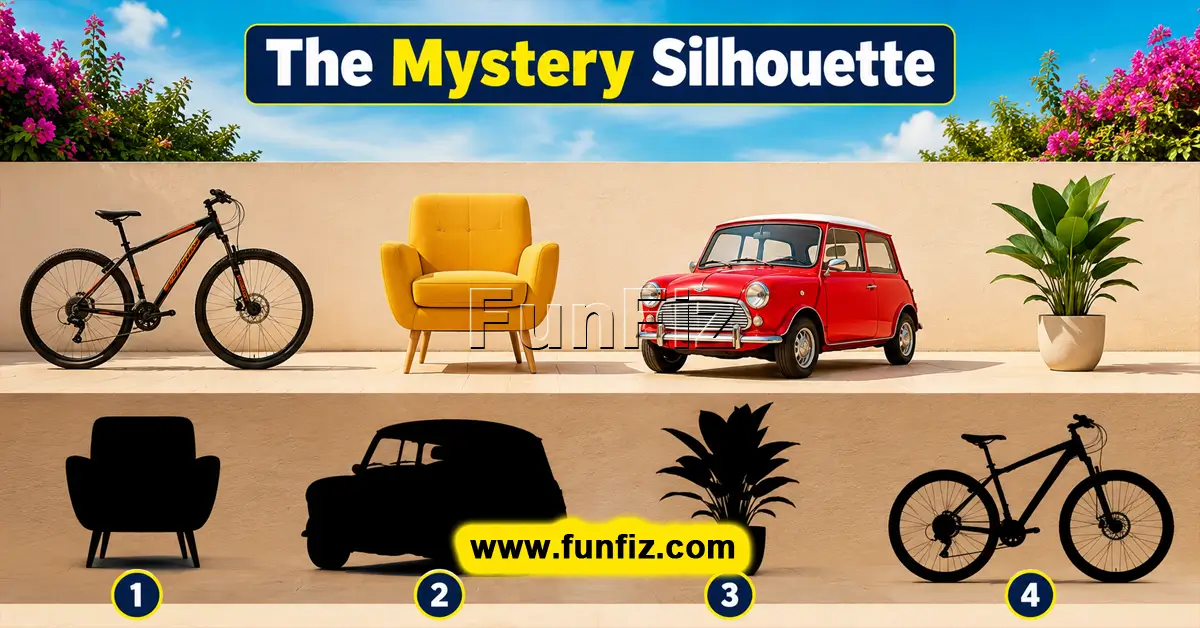
Quale 'Ombra' appartiene all'oggetto?
Riesci a risolvere l'indovinello di Einstein?

Quale 'Interruttore' accende la lampadina?

Chi è il 'Proprietario' del cane smarrito?
Chi è 'evaso' per primo dalla stanza chiusa a chiave?

Chi è il 'Vero Medico' in questa immagine?
