' /%3E%3Ctext x='16' y='23' font-family='Arial, sans-serif' font-size='30' font-weight='bold' fill='white' text-anchor='middle'%3EF%3C/text%3E%3C/svg%3E)
Progress
Flip each card to discover all the answers!
Share The Fun
Invite friends to take this challenge!
ご存知でしたか?
針の目とは、針の鈍い端にある小さな穴のことです。現存する最古の針は約5万年前のものです。
嵐の「目」(ハリケーンの中心)は、通常、晴れて穏やかで、最も激しい気象が発生する眼の壁に囲まれています。
カメラの「目」はレンズです。最初の恒久的な写真は、1826年にジョゼフ・ニセフォール・ニエプスによって撮影されました。
磁気コンパスは、占いと航海のために、中国の漢王朝(紀元前206年~紀元後220年)の時代に初めて発明されました。
What Has One Eye but Cannot See? Puzzle (Riddle) - Crack the Classic Brain Teaser
Here's a riddle that has stumped people for generations.
Simple words. Obvious meaning. Yet somehow, the answer always seems to slip away.
Ready for it?
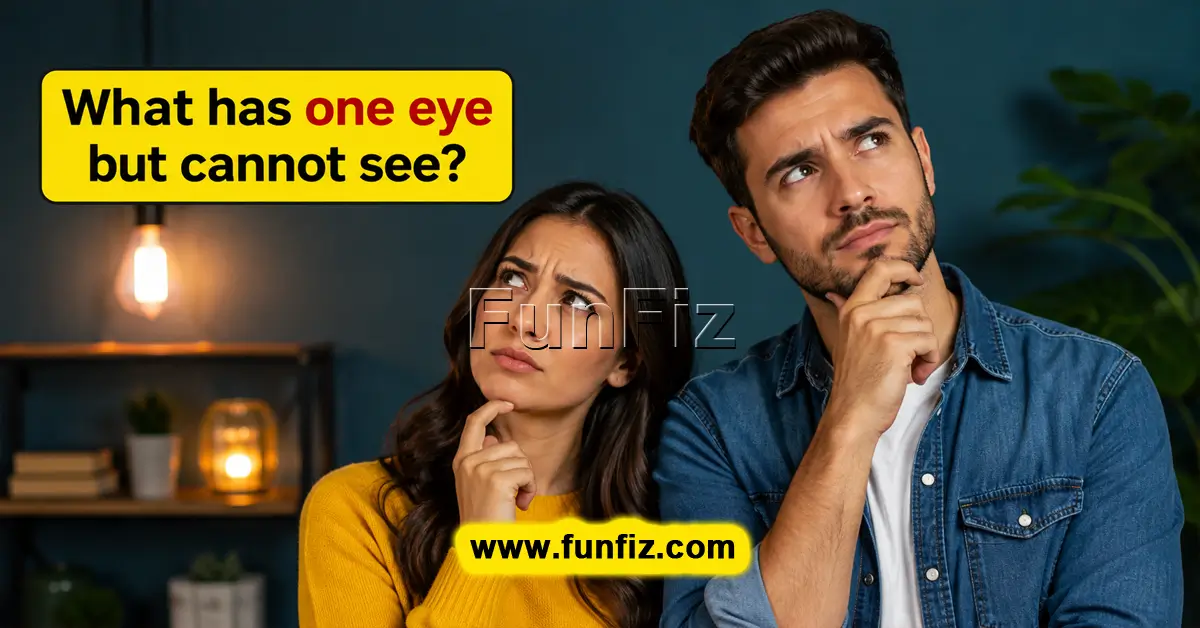
"What has one eye but cannot see?"
Think about it. A single eye. No vision. What could it be?
Think Before You Peek
This riddle is a classic for a reason. It plays with your assumptions. You immediately think of living things—animals, people, creatures. But that's exactly where the trap lies.
The answer is not a living thing. It's something you see every day. Something so ordinary that you never stop to think about it.
Still stuck? That's the point. The simplest riddles are often the hardest to solve.
⚠️ SPOILER ALERT ⚠️
The solution is below. If you want to solve it yourself, stop here.
The Answer: What Has One Eye but Cannot See?
A needle.
A needle has an eye—the tiny hole at the top where you thread it. But it cannot see. It has no vision. No consciousness. Just a hole that looks like an eye.
Simple. Obvious. And yet, most people don't get it on the first try.
Why This Riddle Tricks Your Brain
This riddle is a masterclass in how language fools us.
The Power of Assumption
When you hear the word "eye," your brain immediately thinks of a living creature. A person. An animal. A fish. Something that breathes. Something that looks.
But the riddle never says it's alive. Your brain added that assumption all by itself. That's the trick.
The "Cannot See" Part
If it has an eye, you expect it to see. The riddle tells you it cannot see. That contradiction forces your brain to search for alternatives. But because you're stuck on the "living thing" assumption, you miss the obvious answer.
The Simplicity Principle
The most elegant riddles have simple answers. If the answer requires a complex explanation, it's a bad riddle. This one works because the answer is right in front of you.
More Riddles Like This One
If you enjoyed this riddle, try these other classic brain teasers.
Riddle 2: The Noisy Silence
"What has a mouth but cannot eat?"
Click for Answer
A river. It has a mouth where it meets the sea, but it cannot eat.
Riddle 3: The Silent Scream
"What has a head and a tail but no body?"
Click for Answer
A coin. It has heads on one side and tails on the other, but no body.
Riddle 4: The Timeless Object
"What has hands but cannot clap?"
Click for Answer
A clock. It has hands that point to the time, but they cannot clap.
Riddle 5: The Key to Nothing
"What has keys but cannot open any locks?"
Click for Answer
A piano. It has keys that produce music, not open doors.
The Art of Solving Riddles
Riddles like this one are more than just fun. They're mental exercises. They sharpen your thinking in ways you don't realize.
How to Solve Any Riddle
- Read it literally: Don't assume. Read exactly what it says.
- Look for double meanings: Words often have multiple definitions.
- Think of objects, not just living things: Most riddles use everyday items.
- Consider the obvious: The answer is usually simple.
- Don't overcomplicate: If your answer needs a paragraph to explain, it's wrong.
Why Riddles Are Good for You
- They improve creative thinking
- They teach you to question assumptions
- They strengthen problem-solving skills
- They're fun for all ages
- They make great conversation starters
Riddle Comparison Table
| Riddle | Answer | Trick |
|---|---|---|
| What has one eye but cannot see? | Needle | Eye = hole, not organ |
| What has a mouth but cannot eat? | River | Mouth = opening, not body part |
| What has a head and tail but no body? | Coin | Head/tail = sides, not anatomy |
| What has hands but cannot clap? | Clock | Hands = pointers, not limbs |
| What has keys but cannot open locks? | Piano | Keys = music notes, not locks |
Frequently Asked Questions About Riddles
Why are riddles so hard to solve?
Because they trick your brain into making false assumptions. You hear words and immediately think of their most common meaning. Riddles exploit that habit.
Are riddles good for your brain?
Yes. They improve cognitive flexibility, creative thinking, and problem-solving skills. They're like a workout for your brain.
What's the oldest known riddle?
The Riddle of the Sphinx: "What walks on four legs in the morning, two legs at noon, and three legs in the evening?" Answer: A human (crawling as a baby, walking as an adult, using a cane in old age). It dates back to ancient Greece.
Can anyone solve a riddle?
Yes. It's not about intelligence—it's about how you think. Learning to spot assumptions is a skill anyone can develop.
What makes a good riddle?
A good riddle is simple, clever, and has a satisfying answer. It should be easy to remember but hard to solve. The answer should make you say, "Of course!"
Challenge Your Friends
Now that you know the answer, you can use this riddle to test your friends and family.
How to Ask It Perfectly
- Say it slowly: "What has one eye but cannot see?"
- Pause and let them think
- If they guess living things, say nothing—let them squirm
- When they give up, reveal the answer
- Watch them groan
The reaction is always the same: "Oh, of course! That's so obvious!"
That's the beauty of a good riddle.
Create Your Own Riddle
Now it's your turn. Try creating a riddle of your own.
The Formula for a Great Riddle
- Pick a common object
- Identify its parts (eye, mouth, hands, keys, etc.)
- Describe it using those parts
- Add a contradiction ("cannot see," "cannot eat," "cannot clap")
- Test it on friends
Example
- Object: A tree
- Parts: Bark, leaves, roots
- Riddle: "What has bark but cannot bite?"
- Answer: A tree
Simple. Elegant. Fun.
Riddles are more than just jokes. They're a way of seeing the world differently. They remind us that words can mean more than one thing. That assumptions are dangerous. That the obvious answer is often the right one.
So the next time someone asks you a riddle, pause. Think. Question your assumptions.
The answer is simpler than you think.